
. Introduction
Medicinal plants have been used in traditional medicine since prehistoric times. Information about their properties and uses was passed down gradually from generation to generation, and this knowledge was gradually expanded as civilisation developed. Today, many medicinal plants are still used for similar purposes, whilst new types of activity and applications are being discovered. The importance of medicinal plants for human health is undeniable. The World Health Organisation (WHO) recognises 252 medicines as essential and fundamental; 11% of these are exclusively plant-based, whilst a significant number are synthetic medicines derived from natural precursors. For example, digoxin is derived from Digitalis spp., quinine and quinidine are derived from Cinchona spp., and vincristine and vinblastine are derived from Catharanthus roseus. The popularity and importance of herbal medicines are evidenced by figures released by the WHO: 80% of the world’s population uses traditional medicine for primary healthcare, and most of this treatment is based on the use of plant extracts and their active compounds (Niazi & Monib, 2024; Sohani, 2021; Turarug, 2023). More than 50 000 species of medicinal plants have been identified worldwide, which synthesise numerous phytochemicals with proven or potential biological activity. There are many known taxonomic groups comprising valuable medicinal plant species. Some include numerous species of medicinal plants, whilst others consist of just a single species. The carnation family (Caryophyllaceae Juss.) comprises around 85 genera and 2630 species worldwide. It is found mainly in the Mediterranean region, as well as in Iran-Turan areas. The family Caryophyllaceae is cosmopolitan and includes many popular ornamental plants, such as carnations (Dianthus L.) and baby’s breath (Gypsophila L.). Only 41 medicinal species (20 genera) have been identified in the carnation family. The most numerous genera are Dianthus L. and Stellaria L. (6 each), and 11 genera each have one species. They are used almost exclusively in traditional medicine; in conventional medicine, only three species are used: Allochrusa gypsophiloides (Regel) Schischk, A. paniculata (Regel & Herder) Ovcz. & Czukav., and Saponaria officinalis L. Species in this family are rich in ecdysteroids of various structures, which have tonic, adaptogenic, and regenerative effects; saponins (triterpenes, steroids), which are used as expectorants; numerous flavonoids, including derivatives of quercetin and genin; and, in small quantities, alkaloids (Grudzinskaya et al., 2021; Harbaugh et al., 2010; Mabberley, 2008; Niazi & Monib, 2024). The main objective of this review article is to provide detailed information on the origin, biology, and biochemistry of soapwort, with particular emphasis on individual groups of secondary metabolites and their biological activity.
. Biology and occurrence of soapwort
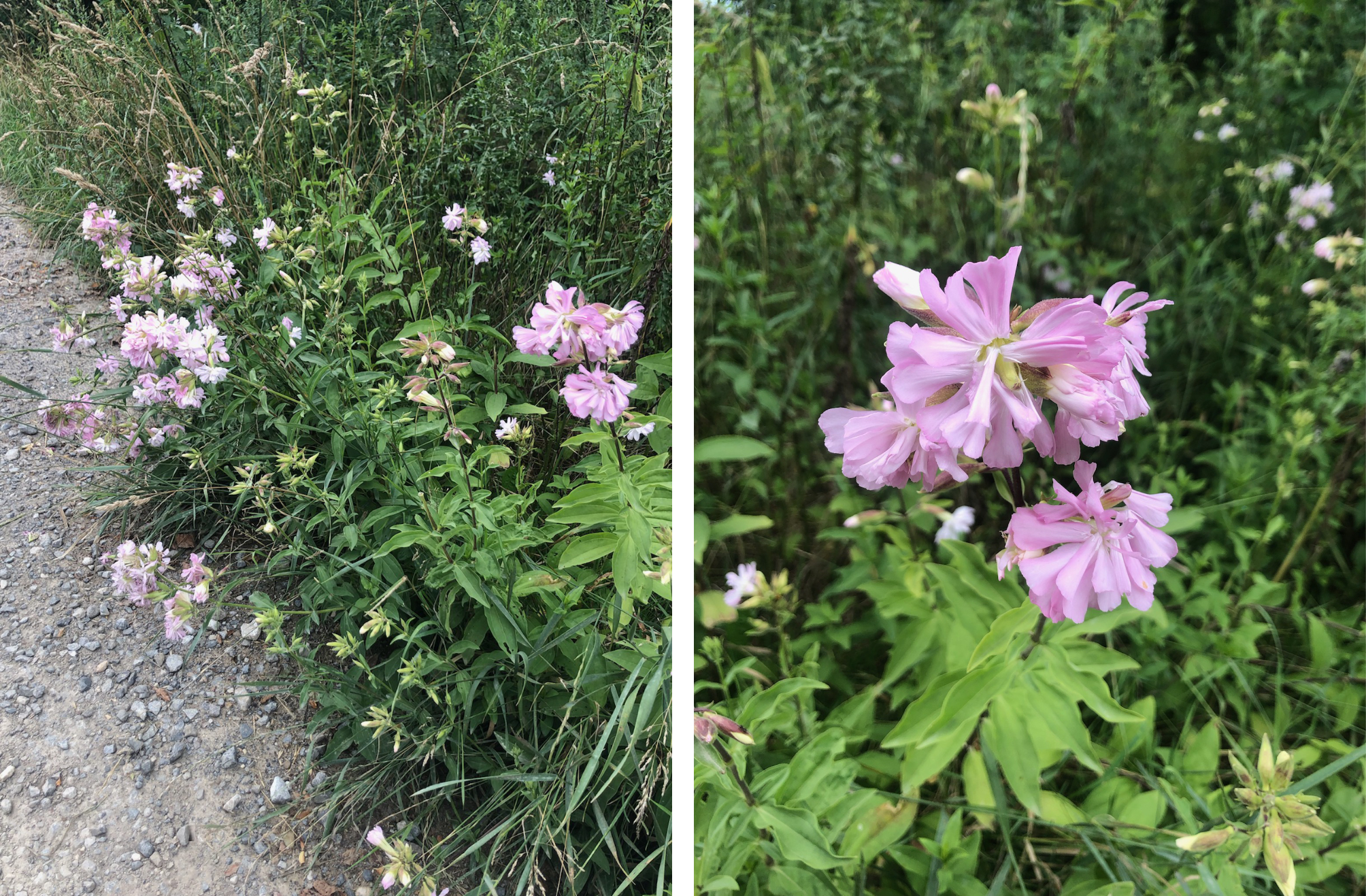
One of the most important members of the carnation family, known for its various uses, is soapwort (Saponaria officinalis L., family Caryophyllaceae), a medicinal plant cultivated in various parts of the world. Soapwort is a perennial plant with a cylindrical, long, branched rhizome bearing numerous roots. The above-ground part grows to a height of 30–90 cm. The leaves are elliptical or oblong, three-veined, pointed, and arranged oppositely on the stem. The plants flower from June to September and even longer in favourable weather conditions. The pink or white flowers are clustered in terminal corymbs (Figure 1). The flowers open in the evening, giving off a delicate almond scent, and remain open for around 72 hours. They are pollinated mainly by moths. The fruit is an ovate capsule containing small seeds (Chandra et al., 2021; Davis & Turner-Jones, 2008; Sefrioui et al., 2021). Due to its original shape and decorative flowers, soapwort is also cultivated as a horticultural plant in many countries. This species is characterised by a high saponin content. As the highest concentration of these compounds is found in the rhizomes, this part of the plant is most commonly used in research and practical applications (Smułek et al., 2017).
Figure 1
Soapwort plants in their natural habitat (full flowering period) – the area around the Łęczna-Włodawa Lake District (photo by R. Nurzyńska-Wierdak).
Soapwort occurs in temperate climates in most European countries, including Spain, France, Italy, and Poland, as well as in North Africa, the Americas, and Western Asia. The species inhabits open wasteland, roadsides, railway embankments, field margins, scrubland, and alluvial terraces. It is a ruderal plant (Davis & Turner-Jones, 2008; Endonova et al., 2015). Species of the soapwort genus are very similar morphologically, which has long posed a challenge for taxonomy. To clarify the taxonomy of the genus, Dashti (2018) investigated the micromorphology of seeds from 10 species of the genus Saponaria L. (Caryophyllaceae). The micromorphological characteristics of the seeds were considered to be potential taxonomic features of the species. The seed micromorphology varied between the species, and its taxonomic value was significant in distinguishing taxa at the species level. The plant is a common and sometimes troublesome weed. It can survive for years in abandoned dwellings. In the USA, soapwort has become an invasive weed. It is often found in large, dense clusters on hillsides, along rivers, roadsides, railway tracks, meadows, and wasteland at an altitude of up to 2600 m above sea level. Soapwort grows in moist, well-drained soil under full sun or partial shade. Propagation usually occurs via seeds, but the plant can also spread clonally via rhizomes. Visits by insects make a significant contribution to seed set, even though self-pollination is capable of producing viable seeds (Charalambous et al., 2024; Davis & Turner-Jones, 2008). In addition to its decorative qualities (its distinctive growth habit and the delicate scent of its flowers), soapwort is cultivated and harvested primarily for its medicinal and cosmetic properties.
. Secondary metabolites of soapwort
Soapwort contains a large amount (26–35%) of saponins (gypsogenin, hederagenin, hydroxyhederagenin, and quillaic acid aglycone structures among other things), which foam when extracted with water. In addition to saponins, soapwort also contains flavonoids, quillic acid, fatty acids, and various phenolic compounds. Soapwort roots contain oligosaccharides, including gentiobiose and the pentasaccharide saponaria. High levels of minerals (5%) have been found in soapwort roots; these are biologically important for living organisms (Cherevach & Shchekaleva, 2020; Moniuszko-Szajwaj et al., 2013; Slobodianiuk et al., 2021; Smułek et al., 2017). Endonova et al. (2015) identified five compounds, both aglycones and glycosides, in an alcoholic extract of the aerial parts of soapwort; apigenin derivatives were the most abundant (43.95 mg/g). In the second year of cultivation, a high yield of roots (10 tonnes per hectare) containing 26–35% of saponins can be obtained. It is practical to use roots harvested in autumn (when their toxicity is low) for the production of food emulsifiers and roots harvested during the budding stage (when toxicity is at its highest) for medical and cosmetic purposes (Cherevach & Shchekaleva, 2020).
Saponins, important secondary metabolites of soapwort, are commonly known as non-volatile surfactants, widely found in nature, occurring mainly in the plant kingdom. The name ‘saponin’ derives from the Latin word sapo, meaning ‘soap’, because saponin molecules form a soap-like lather when shaken with water. They constitute a class of high-molecular-weight amphiphilic compounds comprising a triterpenoid and/or a steroid aglycone as the lipophilic moiety and sugars as the hydrophilic moiety. Saponins have a variety of properties, including sweetness and bitterness (Singh & Chaudhuri, 2018; Vincken et al., 2007). Based on the type of sapogenin, saponins are divided into two classes (Figure 2). Steroidal saponins contain sapogenin with a four-ring steroid core and additional heterocyclic furan and pyran rings, whereas triterpenoid saponins do not possess these additional rings, although they do have a steroid structure.
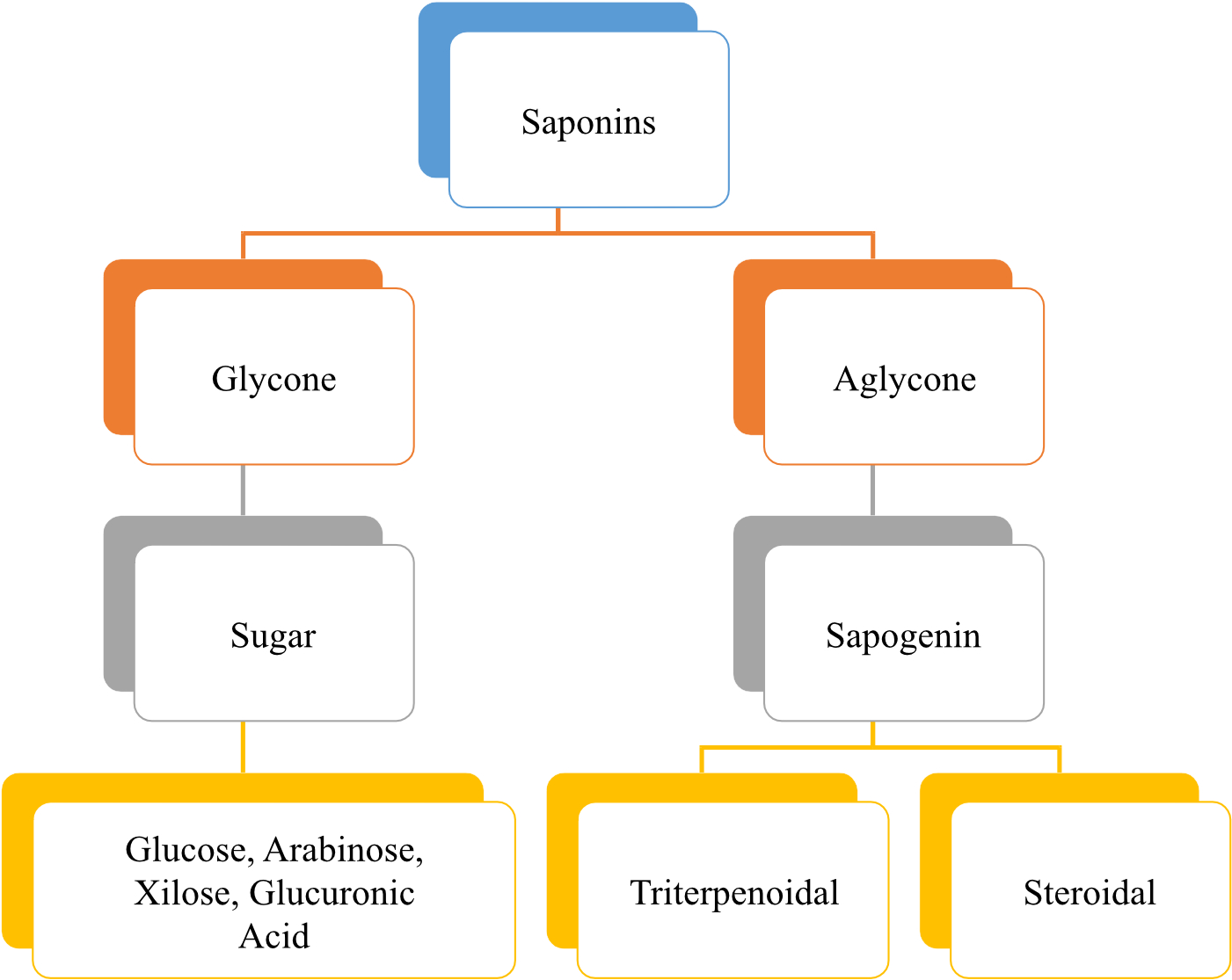
Chemically, saponins are glycosides containing a fat-soluble triterpene aglycone (found mainly in dicotyledonous plants) or a steroid aglycone (found mainly in monocotyledonous plants), to which a water-soluble carbohydrate chain consisting of one, two, or three sugar groups (glycone) is attached, forming mono-, bi-, and tridesmoside saponins, respectively (Góral et al., 2018; Nguyen et al., 2020). Maceration, reflux, and Soxhlet extraction account for around 60% of techniques used to extract saponins from plant materials. Modern extraction processes account for around 30%, and indirect extraction methods for around 10% (Cheok et al., 2014). The presence of saponins in plant material can be confirmed using a dry or wet test, depending on the foaming characteristics. The total saponin content can be determined by further extraction with n-butanol (El Aziz et al., 2019).
Triterpene saponins are widespread in the plant kingdom. They have been found in over 90 families, including the families Caryophyllaceae, Araliaceae, Fabaceae, and Rosaceae, each comprising between 900 and 2000 plant species. Representatives of these families are of commercial importance and also serve as a source of new, high-yield sources of triterpene saponins (Cherevach & Shchekaleva, 2020). The saponins present in soapwort contain a β-amyrin-type triterpene aglycone and are mainly bidesmosides, substituted at the C3 and C28 positions. The classical definition of saponins is based on their surface-active properties. Twenty-one saponins have been identified in soapwort rhizomes. The saponins found in soapwort are derivatives of gipsogenic acid, hydroxy-gipsogenic acid, and quillaic acid, as well as gipsogenin, although the presence of the latter is disputed (Charalambous et al., 2024; Góral et al., 2018).
Natural saponins have recently emerged as a promising new class of bioactive compounds, demonstrating a remarkable ability to enhance the pharmacological efficacy of toxin-based therapeutics. It has been established that the biological activity and synergistic potency of saponins are strongly dependent on their chemical structure. However, to date, only a limited number of structurally defined, pure, natural saponins have been successfully isolated and systematically studied. Among these, SA1641 and SO1861 are two representative natural products of this group of compounds. The former was isolated from Saponinum album (Merc), a complex mixture of saponins extracted from Gypsophila paniculata L., whilst the latter was isolated from the roots of S. officinalis L. (Gilabert-Oriol et al., 2016; Sama et al., 2019; Weng et al., 2009). Four structurally defined saponins have recently been successfully isolated and characterised from the roots of S. officinalis: SO1684, SO1726, SO1406, and SO1448. Among these, SO1406 has demonstrated a remarkable ability to enhance the cytotoxicity of the ribosome-inactivating protein. This highlights the potential of SO1406 as a potent cytotoxicity enhancer and also suggests that natural saponins may improve the intracellular delivery and therapeutic efficacy of protein-based anticancer agents (Lim-Paik et al., 2026).
. Soapwort in traditional and modern applications
. Traditional uses
In addition to its decorative uses, soapwort has traditionally been cultivated and harvested primarily for the medicinal and cosmetic properties of its roots and rhizomes. Soapwort root is a traditional herbal remedy used as a diuretic and purgative, and to treat coughs, bronchitis, stomach ailments, bone deformities, rheumatism, eczema, skin conditions, biliary disorders, liver problems, and respiratory diseases. Traditional medicine has used soapwort roots to promote urine production and treat rheumatic pain. In Morocco, a decoction of the stem and root is taken orally to relieve rheumatic pains and as a cleansing, diuretic, and emetic preparation. This decoction is known in Türkiye as an antirheumatic, respiratory, and diuretic agent (Chandra et al., 2021). Soapwort leaves were rubbed into the skin to repel insects and were also used as a disinfectant (Charalambous et al., 2024; Talluri et al., 2018). In Türkiye, soapwort leaves are used as a diuretic, for bronchitis treatment, as well as for their expectorant and diaphoretic properties. In Italy, they are known as a disinfectant and liver remedy (Chandra et al., 2021). Saponaria root is used in the food industry as a raw material for the production of halva, turrón, and other sweets (Figas & Lefelbajn, 2023).
. Gastrointestinal diseases and inflammations
Plants with a history of traditional use are frequently employed in the treatment and prevention of diseases. In traditional medicine, soapwort is used to treat gastrointestinal disorders and inflammation. The processes occurring during digestion are closely linked to the bioactivity of saponins, as they are poorly absorbed and persist for a long time in the gastrointestinal tract. The low bioavailability of saponins is a result of many factors, but the more favourable properties of sapogenins translate into higher bioavailability and bioactivity. Saponin metabolism in the stomach and colon is crucial for sapogenin release. Saponins inhibit enzymes and cholesterol absorption, but their specific chemical structure is crucial for their effective action (del Hierro et al., 2018). Sowmya and Pavuluri (2023) investigated the potential of ethanol extracts from soapwort to inhibit H+/K+ ATPase and neutralise acids to determine whether they could be used in the treatment of ulcers. The authors suggest that the ethanol extract of soapwort contains substances that can inhibit enzymes and neutralise acids, making it a potential alternative treatment for digestive problems. In medicine, dried soapwort root and rhizome (Saponariae rhizoma et radix) are used, containing saponin glycosides (saporubin), flavonoids and other phenolic compounds, carbohydrates (D-glucose, D-galactose, D-fructose, D-sucrose), and fatty acids. Most applications of soapwort are based on its high content of surface-active saponins, ranging from 1.7% to 8.6% in the rhizomes. The saponins in soapwort help to thin mucus, making it easier to expel from the respiratory tract. Talluri et al. (2018) assessed the hepatoprotective activity of root parts (rhizomes) of S. officinalis against paracetamol-induced liver toxicity. Soapwort root extracts were found to be safe at a dose of 2000 mg/kg body weight in an acute toxicity study and showed dose-dependent protection against liver toxicity. Liver damage occurs primarily due to excessive free radical production, and S. officinalis roots have been shown to inhibit free radicals. Therefore, it can be assumed that the therapeutic effects of soapwort extracts resulted from their rich chemical composition (sterols, terpenoids, glycosides, carbohydrates, proteins, flavonoids, alkaloids, phenols, and tannins) and individual and/or synergistic effects. Raafat and Al Haj (2023) investigated the effect of active phytochemicals isolated from soapwort on the modulation of diabetic neuropathy and inflammation, as well as their possible mechanism of action. The authors showed that quillaic acid from the group of triterpene saponins is the most abundant and biologically active compound of soapwort. Soapwort extract demonstrated significant antidiabetic, antineuropathy, and anti-inflammatory effects. These results provide new insights into the potential of soapwort and quillaic acid as future alternative therapies for diabetic neuropathy and inflammation.
. Infectious diseases
Epidemic diseases are common, and the treatment process can be lengthy. Pathogenic microorganisms reproduce as biofilms and contribute to the development of various infectious diseases. The therapeutic potential of saponins in eukaryotic cells is related to their ability to increase cell membrane permeability by forming complexes with cholesterol. Saponins can impair the permeability of the outer bacterial cell membrane. Approximately 90% of the outer cell membrane surface of Gram-negative bacteria, which does not contain natural cholesterol, is covered with lipopolysaccharide. Saponins can interact with the lipid portion of the cell membrane, thereby increasing the permeability of the bacterial cell wall due to their detergent-like properties. Theoretically, this activity could facilitate the penetration of antibiotics through the bacterial cell wall membrane (Cankaya & Somuncuoglu, 2021).
S. officinalis is an effective antibacterial plant that could serve as a good source of alternative antibiotics for the treatment and control of infections. Extracts from soapwort have been shown to be active against avian pathogenic Escherichia coli (APEC), which is associated with numerous infections in humans and animals (Nabinejad, 2013). The study demonstrated the antimicrobial activity of extracts from the aerial parts of S. officinalis against Acinetobacter baumannii, a Gram-negative bacterium commonly found in hospital-acquired infections. As an opportunistic pathogen in hospitals, it is resistant to many antibiotics and is responsible for numerous infections, such as bacteraemia, pneumonia, meningitis, genitourinary tract infections, and post-operative wound infections. Extracts from soapwort may be proposed as a treatment for infections caused by this bacterium (Javadian et al., 2019). Extracts from soapwort root exhibit antioxidant properties, as well as antimicrobial activity against E. coli, Staphylococcus aureus, Enterococcus faecalis, and Salmonella enteritidis (Charalambous et al., 2024). Yu et al. (2022) explained the modulatory effect of soapwort extract and saponarin on innate immunity and concluded that saponarin is a promising potential treatment for inflammatory diseases. Research by Veda Priya et al. (2017) reported the antibacterial activity of the roots of Saponaria officinalis and Zanthophyllum aramatum. The extracts demonstrated comparable antibacterial activity to the standard drug ciprofloxacin. The extracts also demonstrated greater activity against Gram-negative organisms compared to Gram-positive organisms: greater activity against E. coli and S. typhimurium and lower activity against Clostridium sporogenes and S. pneumoniae. In turn, Fazeli Nasab et al. (2023) showed that the S. officinalis flower extract had a lower inhibitory effect on the growth of Shigella dysenteriae, Rathayibacter tritici, E. coli, and Listeria. monocytogenes compared to other plant extracts.
. Skin diseases and care
Soapwort is used topically to treat various skin conditions, including eczema, psoriasis, and acne, due to its cleansing and anti-inflammatory properties (Charalambous et al., 2024). Extracts from various parts of the soapwort plant (roots/rhizomes, stems, leaves, flowers/fruits) have the ability to reduce surface tension at the water/air interface and to produce foam (Góral et al., 2018). A common cause of increased skin susceptibility to infections and allergies is the use of harsh cleansing products, soaps, and other detergents. The surfactants used to remove dirt, sweat, sebum, and oils from the skin’s surface also promote the exfoliation of the epidermis. Consequently, the very properties of surfactants that make them useful for cleansing can also disrupt the proper functioning of the protective barrier of the epidermis and the deeper layers of the skin, where living cells are found (Ananthapadmanabhan et al., 2004; Corazza et al., 2010; Triglia et al., 1991). Yu et al. (2025) investigated the potential of S. officinalis callus (SC) and its extract (SCE) as a novel exfoliating cosmetic ingredient. The authors demonstrated that SC enriched with saponarin as a bioactive compound exhibited significant anti-inflammatory effects in RAW264.7 cells (a murine macrophage cell line) stimulated with lipopolysaccharide. In clinical studies, SC peel demonstrated significant exfoliation without causing skin irritation. Furthermore, SCE demonstrated favourable foaming properties and stability. Clinical skin tests revealed no safety concerns and confirmed the exfoliating efficacy of SC. Saponins from soapwort are capable of reducing surface tension to a degree comparable to that of synthetic surfactants. For centuries, aqueous extracts from soapwort roots have been used not only as a natural detergent but also as an emulsifier and even as a cough remedy. Due to their high affinity for membrane lipids, particularly cholesterol, some saponins exhibit varying degrees of haemolytic activity. It has been demonstrated that numerous isolated saponins and saponin-rich extracts have no degrading effect on lipid monolayers, in contrast to several synthetic surfactants (Jurek et al., 2021).
. Other types of activities
The raw material from the soapwort plant also exhibits antioxidant, anticancer, antithrombotic, and insecticidal properties. Saponins from soapwort possess anti-tumour properties and are also of interest as enhancers of endosomal escape in targeted cancer therapies. These saponins share structural features with the vaccine adjuvant QS-21 and thus represent a potential alternative source of saponin adjuvant precursors. Jo et al. (2025) carried out genome sequencing of S. officinalis and identified 14 enzymes that complete the biosynthetic pathway of saponarioside B. These findings open up possibilities for the development of new natural pharmaceuticals, drug delivery agents, and potential immunostimulants. An assessment of anticancer activity in the A375 (human malignant melanoma), HeLa (human cervical carcinoma), and HaCaT (healthy human keratinocytes) cell lines demonstrated that the acetone extract from S. officinalis had a significant concentration-dependent inhibitory effect on the proliferation of A375 cells. None of the extracts exhibited antineurotoxic activity against the cytotoxic Aβ25–35 peptides (Charalambous et al., 2024). Thrombophlebitis is considered one of the most common complications of chronic venous insufficiency. The findings of Tsubanova et al. (2025) investigated the effect of a thick extract of soapwort herb on histological changes in the marginal vein of the ear under conditions of experimental thrombophlebitis. The experiment was conducted on 24 rabbits weighing 2–2.5 kg: Group 1 – control group with no changes; Group 2 – control group with pathological disease (thrombophlebitis); Group 3 – thrombophlebitis + therapeutic and prophylactic administration of soapwort extract at a dose of 20 mg/kg; Group 4 – thrombophlebitis + therapeutic and prophylactic administration of Escuvit at a dose of 7.2 mg/kg. Pharmacognostic studies have shown that the extract under investigation contains a significant amount of triterpene saponins and other biologically active compounds, whose biological activity correlates with the pathogenesis of venous disorders. Therapeutic and prophylactic administration of the extract at a dose of 20 mg/kg significantly prevented the formation of a clot in the marginal ear vein in rabbits. The soapwort extract prevented damage to the vessel walls and reduced or eliminated degenerative changes and inflammatory reactions in the surrounding tissues. Significant advantages of the soapwort extract compared with Escuvit have been demonstrated.
A study by Sefrioui et al. (2021) showed that the saponins found in Saponaria officinalis, Glycyrrhizia glabra, and Herniaria glabra exhibit strong spermicidal activity and may be used in natural contraceptive formulations. The extracted saponins likely act by impairing the functional integrity of the sperm cell membrane. This change is caused by the interaction of saponins with membrane lipids, resulting in excessive permeabilisation.
Research shows that soapwort root extract can also act as a substitute for acaricides, which are products used to control mites. This property is highly desirable in agriculture, as it may help to reduce the use of pesticides (Figas & Lefelbajn, 2023). Pavela (2017) highlights the potential for using soapwort root extract to protect vegetables against the two-spotted spider mite (Tetranychus urticae Koch.), one of the most dangerous herbivorous pests, which is hazardous not only due to its rapid life cycle and high fertility but also due to its ability to rapidly develop resistance to the active ingredients of acaricides. The author suggests this extract as a potential base substance that may be beneficial in reducing the number of harmful developmental stages of T. urticae. Soapwort may also be of significance in animal husbandry. It can be used in cattle farming as a dietary supplement and to support the physiological development of calves (Pecka-Kiełb et al., 2025).
. Conclusions
Soapwort (Saponaria officinalis L.), a medicinal plant known in traditional medicine, retains its status as a valuable raw material for medicinal and cosmetic purposes. Extracts from soapwort roots are currently used in the pharmaceutical, cosmetics, and food industries. Scientific research into this valuable plant is providing new insights into the use of soapwort’s bioactive compounds (primarily triterpene saponins) in modern therapies (including cancer treatments) as well as in organic cosmetics formulations. This literature review suggests the need for further research on this valuable plant and for elucidation of the mechanisms of action of soapwort bioactive substances (including those from non-root organs). It also seems that, although soapwort is widely known as a cosmetic plant, there is still a lack of scientific basis for its use in dermatology. Ultimately, the results of such studies may provide new, important data for phytotherapy and biocosmetology.