

. Introduction
Pakistan is an agricultural country having an area of around 79.6 million hectares (Mha) with an arid and semiarid climate. Of the total area, around 23 million hectares are conducive to crop production, and nearly 25% of the over-all cultivated area is earmarked for rain-fed agriculture. However, a wide range of issues, including moisture stress, soil erosion and crusting, nutrient depletion, improper fertilizer usage, poor crop husbandry, and unsustainable practices, pose a major threat to rain-fed agriculture. Adopting sustainable crop production methods, such as utilizing integrated sources of nutrient management, planting potential crops and their cultivars, appropriate rainwater harvesting techniques, and applying scientific soil and water conservation methods can maximize the yield potential of rainfed areas (Baig et al., 2013).
Rocket salad (Eruca sativa Mill.) belongs to the mustard family “Brassicaceae.” This annual herb originates from Mediterranean countries of the world. It is economically a potential oilseed crop cultivated for the extraction of seed oil used for medicinal purposes in Pakistan and other South Asian countries (Doležalová et al., 2013). Its popular names include arugula, garden rocket, and salad rocket, and it can either be collected in the wild or cultivated for fresh consumption as salad, raw green and also cooked as leafy vegetable (Mirzabe et al., 2021). Two types of rocket salad are cultivated commercially: “perennial wall rocket” (Diplotaxis tenuifolia L.) and (Eruca sativa Mill.), which is an annual species named as “annual garden rocket” (Garg & Sharma, 2015). The seeds of E. sativa Mill. normally contain proteins (27.4%), oil (27.8%), ash (6.6%), moisture (4.1%), and a vast composition of fatty acids, i.e. palmitic, linoleic, oleic, stearic, and erucic acids (Kutlu et al., 2021).
Its extraordinary medicinal benefits have increased its global consumption. Strongly peppery rocket salad leaves are used for their laxative, tonic, emollient, depurative, astringent, diuretic, antiphlogistic, stimulant, and rubefacient effects in addition to being used in sauces, soups, pesto, and condiments (Mahmoud & Taha, 2018). Brassicaceae crops, including rocket salad, have abundance of phytochemicals, i.e. vitamins A and C, phenolic compounds, glucosinolates, carotenoids, flavonoids, and degradation products like isothiocyanates, which are all accessible and their utilization with green leaves minimizes the hazard of cardiovascular diseases (CVD) (Testai et al., 2022). Moreover, rocket salad has cyto-protective agents having anti-inflammatory, anti-ulcer, and anti-secretory action (Bell et al., 2014).
This most neglected and minor oilseed crop is considered as highly drought tolerant due to its efficient fibrous root system, which extracts moisture from deeper soil layers and, thereby, is appropriate across the arid and semi-arid regions of the country (Ginzburg et al., 2020). The shortage of water is a main problem of dry-land agriculture and in rainfed areas of Pakistan, and small-holding farmers prefer cultivating E. sativa Mill. as a major livelihood source that is economically a viable option (Kamran et al., 2015). This crop is seeded directly and can be harvested after 25 to 30 days, and postharvest leaves can be preserved in controlled atmospheric conditions to be used later for commercial purpose as a salad in different food items (Houston et al., 2023).
The crucial factors during growth stages include local environmental conditions, soil type, sowing time and method, fertilizer application rate, and vegetation period, which have a significant impact on crop growth and yield attributes (Yousaf et al., 2023). The broadcasting is a preferred sowing method of Eruca sativa Mill. in different regions of Pakistan being cost-efficient, while the drill method is degraded due to its high expenditure cost. Selection of good, high-yielding, disease-resistant, and genetically modified cultivars helps in maintaining the plant population of Eruca sativa Mill. that sustains crop agronomic performance and its quality, thereby ensuring more economic returns (Silva et al., 2019).
Nitrogen (N) is the most significant component whose optimum level improves plant structure and affects crop productivity and its quality, and just a slight percentage of nitrogen serves for nitrogen fixation which plants take in the forms of NO3- and NH4+ (Ding et al., 2016; Legay et al., 2020). Phosphorus and Potassium are vital mineral elements which cover a sizeable portion of fertilizer application expenditures (Fan at al., 2012). The efficiency of crop production systems is maximized due to excessive use of NPK fertilizers, yet they have detrimental consequences on sustainable agriculture, which can be addressed by introducing organic production systems (Chien et al., 2009).
The long-term soil fertilization impacts brought to light the fact that neither chemical nor organic fertilizer alone can provide a production system that is sustainable in an intensive cropping system. Adopting an integrated nutrient management strategy improves the plant nutrient uptake and use efficiency, thereby aiding in improving growth and seed yield of oilseed rape, which is also dependent upon the choice of variety, optimum dose, and timing of fertilizer application (Rathke et al., 2006). Application of farmyard manure nourishes the soil to a great extent as it contains 16.39% of organic carbon, 0.57% of N, 0.26% of P, 0.63% of K, and an appreciable amount of trace elements, e.g. Zn, B, Ca, Mg, S, and Fe (Yousaf et al., 2024a). Planting Eruca sativa Mill. while using optimal doses of organic manures and inorganic fertilizers in combination provided benefits over the lone use of either of these sources, as evidenced by the improvements in crop production systems, soil physical health, and plant development characteristics (Serawat et al., 2023).
The basic theme of this experimental trial was to recognize the best performing cultivars of Eruca sativa Mill. provided with integrated nutrient supply under all the constraints that may limit its growth during critical stages. The research trial was performed with the following objectives; I) to identify the best available cultivar of rocket salad under limited supply of inputs for resource-poor farmers in rainfed areas, II) to assess the influence of two-year application of organic manure (FYM), mineral fertilizer (NPK), and their combination (FYM + NPK) on soil physicochemical properties, crop development, yield, and quality contents, III) to evaluate the interactive effects of cultivars and mixed dosages of organic and chemical fertilizers on the overall performance of E. sativa Mill. in two-year research trials.
The hypothesis posited that the application of organic and mineral fertilizers in various combinations would enhance the nutritional status of plants, positively impact the development of productivity elements, augment seed yield, and improve the composition of quality contents of rocket salad cultivars.
. Material and methods
. Experimental site description
The research trials in the field were performed over two consecutive years at University Research Farm Koont, Chakwal Road Rawalpindi with 510 m elevation; latitude 33.1° N; longitude 73.0° E that receives 650–800 mm of annual rainfall. The experiments were conducted in fall 2021 and 2022 at the agronomic research area of the farm.
. Preparation of land before sowing
A blade harrow and a disc harrow were used to cut and invert the soil and break the clods. The soil was later leveled by using a plank. Well-rotted farmyard manure was broadcasted 20 days before sowing in recommended doses and incorporated into the plant root zone to make a favorable environment for plant growth.
. Experimental layout and crop husbandry practices
The crop was sown keeping 40 cm of space within the rows and planting distance of 10 cm by using the hand drilling technique in a single-row manner. Two cultivars of Eruca sativa Mill.: NARC (ACC NO. 26187 PGRI) and traditional market available seed of rocket salad were planted under a randomized complete block design (RCBD) with a three-factor factorial plan using three replications in each treatment following two cropping years. The crop cultivars were allocated to main plots and sub-plots allotted to fertilizer treatments. The pH of soil was 8.1. The organic source of nutrients in the form of farmyard manure (10 tons/ha) and inorganic fertilizers such as Urea, DAP, and SOP as a source of NPK (30-30-30 kg/ha) were given as an initial dose at sowing, and N foliar application was given after 60 days of planting. The net plot size of 626.2 m2 (31 m × 20.2 m) was maintained with seven different combinations of treatments as follows:
T0: Control (No Fertilizers applied)
T1: Recommended dose of N-P-K @ 30-30-30 kg/ha
T2: FYM Recommended @10 tons/ha
T3: ½ NPK Recommended @ 15-15-15 kg/ha + Recommended FYM @10 tons/ha
T4: ½ NPK Recommended @ 15-15-15 kg/ha + ½ Recommended FYM @ 5 tons/ha
T5: Recommended P-K @ 30-30 kg ha-1
T6: Recommended P-K @ 30-30 kg ha-1 + N Foliar application as a 2% Urea source.
. Soil analysis of the experimental site
The analysis of soil physicochemical properties, including its textural class, pH, electrical conductivity, saturation (%), organic matter (%), total available nitrogen (%), extractable phosphorus (ppm), and exchangeable potassium (ppm), was done for all the applied fertility protocols at crop sowing and harvesting stages. The soil samples were collected from the experimental area where the crop was planted and from a non-planted area left as a gap between replications, termed as a non-experimental area. The samples were obtained from the soil depth of 0–6 and 6–12 inches, and the analysis was performed to ascertain the influence of nutrient management strategies on the soil of the planted and non-planted site for all the studied parameters. Soil pH was determined with the digital image processing technique by taking 5 samples from each treatment at crop sowing and harvesting stages. Soil colors are visual perceptual properties in which digital values of red, green, and blue (RGB) provide a clue for capturing the spectral signature of various pH levels in soil. Soil pH values exceeding 7.50 were associated with deep brown color of soil (Kumar et al., 2014). Soil texture was obtained by using the laser diffraction method where soil was classified into a particular class based on particle size accordingly with % mass and % volume (Yang et al., 2015). Soil electrical conductivity was measured by using the four-electrode method. A geometric pattern of four electrodes was placed into the soil, with an A.C. voltage provided to the two outside electrodes. The induced current between the two inner electrodes varied according to the concentration of the soil solution (Nadler & Frenkel, 1980).
Saturation percentage of soil was evolved by using the procedure of dielectric measurements. A mixing formula for the composite structure (soil, water, and air) was used to calculate the degree of water saturation, and this law was confirmed experimentally. The association between fractional water content and observed dielectric constant can be expressed in a particularly simplest form for the lower water saturation range (< 60%) (Alharthi & Lange, 1987). The Kjeldahl techniques used to determine total N typically comprise two steps: digestion of the sample to convert organic N to NH4 + -N, and determination of NH4 + -N in the digest. Prior to examination, soil samples to be examined for total nitrogen are often dried, powdered, and sieved. They are frequently kept in non-airtight containers, such as paper bags. NH4 + in Kjeldahl digests can be directly determined using a variety of techniques, but this is typically accomplished by estimating the amount of NH3 released during the distillation of the digest with a strong alkali (Bremner & Mulvaney, 1982). Mogen’s method, distilled water method, basify distilled water method, and acetic acid method are the four new phosphorus extraction techniques that were employed. Murphy and Riley’s colorimetric approach was used to measure the extracted phosphorus, and each method was compared to the Olsen method due to the latter’s increased prominence and repute (Koralage et al., 2015). Soil exchangeable K contents in different applied treatments were determined by using the flame photometer technique (Pratt, 1965). Soil organic matter contents were calculated by using the gravimetric method determining the mass loss at 300°C. With soils that have undergone treatments with varying chemical and physical characteristics, the gravimetric approach was contrasted with the Walkley-Black method having a distinct advantage of no environmental contamination (Miyazawa et al., 2000).
. Methodology for data collection
The yield contributing parameters of the crop such as plant height (cm), total number of seeds per pod, pods per plant, and length of pod (cm) were obtained by selecting ten plants randomly from each treatment and their means were calculated. Likewise, thousand seed weight (g) was evaluated by recording the weight (g) of 100 seeds using a weighing balance and multiplied by 10. Seed yield (kg ha-1) was determined by taking the yield of seeds from each treatment in square meter and later converted into kg ha-1. The quality contents, including oil (%), total protein (%), and fatty acid composition, e.g. oleic acid, linoleic acid, and erucic acid, were evaluated in the laboratory using seed samples of each treatment in both cropping years.
. Statistical data analysis
The analysis of variance (ANOVA) was performed for the recorded data of the studied agronomic and quality parameters with a generalized-linear model approach using analytical software Statistix 8.1 with a randomized complete block design (RCBD) having a 3-factor (crop cultivars, fertilizer protocols, and cropping years) factorial plan to regulate the significance level of these factors and their means differentiated by using Fisher’s test of least significant difference (LSD) at a P ≤ 0.05 probability level. The linear association between the agronomic and quality traits was evolved through Pearson’s correlation analysis by using Past software, while Origin Pro was used for the principal component analysis to determine linear associations between these traits.
. Results
. Physicochemical characteristics of soil
The results of soil samples collected at crop sowing and harvesting stages revealed that soil pH, electrical conductivity, and saturation percentage in the non-experimental area remained the same, as it was not provided any fertilizer treatment. The soil organic matter content was recorded as 0.62% at 0–6 inches compared to that of 0.85% at 6–12 inches of soil depth in the planted area during the crop sowing stage and was further reduced to 0.49% and 0.75% at similar depths during the crop harvesting stage due to the fact that organic matter content of the upper soil layers was excessively consumed by the rocket salad crop (Table 1A).
Table 1A
Soil analysis of the experimental and non-experimental area for studied physicochemical properties at crop sowing and harvesting stages.
The results presented in Table 1A explained that samples collected from the deeper soil layers of 6–12 inches were more fertile at the planted and non-planted sites and gave the highest values for soil total nitrogen, extractable P, and exchangeable K at the crop sowing stage, as it had maximum available nutrients later utilized by the Eruca sativa Mill. plants. The addition of soil organic and mineral fertilizers raised the nitrogen contents to 0.12%, phosphorus to 5.2 ppm, and potassium contents to 110 ppm at crop sowing, while total N = 0.09%, extractable phosphorus = 4.2 ppm, and exchangeable potassium were recorded as 87 ppm at the crop harvesting stage in the experimental area.
The results shown in Table 1B explained the variation of soil physicochemical properties among the various integrated fertility protocols. Soil electrical conductivity was not much affected at both stages in the applied fertilizer treatments but had a major difference when compared to the control. The soil incorporation of ½ NPK + ½ FYM and PK either alone or in a mixture had a great influence on soil pH, and it showed a trend towards acidity. Saturation was not much affected except for the treatment applied with farmyard manure where a maximum was recorded, i.e. 46% and 48% at the sowing and harvesting stages, respectively. The application of ½ NPK + FYM raised the total N to 0.18% and 0.15% at the sowing and harvesting stages, respectively. The treatments with the integrated application of ½ NPK and FYM had maximum soil extractable phosphorus 5.3 ppm and 5.8 ppm, exchangeable potassium 120 ppm and 124 ppm, and organic matter contents 0.88% and 0.82% at the crop sowing and harvesting stages, compared to the other variants (Table 1B).
Table 1B
Physicochemical properties of soil studied for applied integrated fertility protocols in experimental area at crop sowing and harvesting stages.
[i] Remarks: Control = No fertilizer applied, NPK @ 30 kg ha-1 each, FYM @ 10 tons ha-1, ½ NPK @ 15 kg ha-1 each + FYM @ 10 tons ha-1, ½ NPK @ 15 kg ha-1 + ½ FYM @ 5 tons ha-1, PK @ 30 kg ha-1 each, PK @ 30 kg ha-1 each + Foliar N as 2% urea source, EC = electrical conductivity, Total N = total nitrogen, Ext. P = extractable phosphorus, Exch. K = exchangeable potassium, O.M = organic matter.
. Eruca sativa Mill. cultivars
The principal impacts of the rocket salad cultivars on the studied agronomic attributes, quality contents, and fatty acid composition were highly significant (P ≤ 0.05), as presented in Table 2. The genetically modified cultivar NARC (ACC. 26187 – GRI) had peak values of plant height (101.94), number of seeds per pod (26.96), pods per plant (111.56), pod length (2.16 cm), 1000 seed weight (1.46 g), and seed yield (336.88 kg ha-1), compared to the traditional market available seed. The arugula seed of traditional market gave the lowest values of all the recorded agronomic parameters, including thousand seed weight (1.14 g) and seed yield (232.52 kg ha-1) (Table 2).
Table 2
Main and interactive effects of crop cultivars, fertilizer protocols and cropping years on plant height, seeds per pod, pods per plant, pod length, 1000-seeds weight and seed yield of Eruca sativa Mill.
[i] NARC (ACC. 26187 – GRI) = Variety accredited by National Agricultural Research Centre Islamabad Pakistan; LSD = least significant difference; NPK = nitrogen + phosphorus + potassium; FYM = farmyard manure; PK = phosphorus + potassium, *** = highly significant; ** = significant; NS = non-significant
Among quality contents and fatty acid components, the cultivar NARC (ACC. 26187 – GRI) had supremacy over the other with its oil contents (31.76%), total protein (23.96%), and fatty acid composition containing oleic acid (16.96%), linoleic acid (5.04%), and erucic acid (45.03%), respectively. The minimum values of oil contents (24.91%), total protein (20.94%), oleic acid (11.99%), linoleic acid (4.6%), and erucic acid (38.07%) were observed in the arugula seed of traditional market, and both these varieties differed significantly (P ≤ 0.05) in all these parameters (Table 3). Hence, the benefits of cultivating a genetically modified crop cultivar over the available traditional market seed were more clearly pronounced with the obtained outcomes of yield and quality.
. Cropping years
The analyzed results showed that the means of two cropping years for all the agronomic traits and quality attributes were statistically significant except thousand seed weight. The first cropping year of 2021–22 produced the highest results for plant height (92.98 cm), seeds pod-1 (24.29), pods plant-1 (131.5), pod length (1.96 cm), thousand seed weight (1.33 g), and seed yield (319.36 kg ha-1). The agronomic parameters in the second cropping year of 2022–23 were recorded as minimum values of plant height (87.72 cm), seeds pod-1 (22.45), pods plant-1 (43.83), pod length (1.68 cm), thousand seed weight (1.28 g), and seed yield (250.05 kg ha-1) (Table 2).
The impacts of two cropping years on the quality attributes of Eruca sativa Mill. were highly significant. The first year of cropping (2021–22) had a complete dominance over the second year and gave highest results for oil contents (28.85%), total protein (22.72%), oleic acid (14.97%), linoleic acid (4.90%), and erucic acid (42.91%). The lowest values for oil contents (27.83%), total protein (22.18%), and fatty acid composition, i.e. oleic acid (13.98%), linoleic acid (4.75%), and erucic acid (40.17%), were recorded in the second year (2022–23) of cropping (Table 3).
Table 3
Main and interactive effects of crop cultivars, fertilizer protocols and cropping years on quality contents, and fatty acids composition of Eruca sativa Mill.
[i] Remarks: NARC (ACC. 26187 – GRI) = Variety accredited by National Agricultural Research Centre Islamabad Pakistan; LSD = least significant difference; NPK = nitrogen + phosphorus + potassium; FYM = farmyard manure; PK = phosphorus + potassium; *** = highly significant; ** = significant; NS = non-significant
. Integrated fertility protocols
The results revealed that various combinations of fertilizer protocols had a significant (P ≤ 0.05) positive impact on the studied agronomic and quality attributes of Eruca sativa Mill. The highest values for all the agronomic traits and quality characteristics were obtained for T6 (PK @ 30-30 kg ha-1 + 2% Foliar N). It gave maximum plant height (103.14 cm), and a substantial difference was recorded when compared with other treatments. The use of T1 (NPK @ 30-30-30 kg per ha) was much more effective and had considerable importance with significant plant height (94.28 cm) compared to the other treatments. A significant plant height reduction was observed where the fertilizer doses were reduced, and the lowest value (78.47 cm) was recorded in T0 (unfertilized). However, the interaction (V×Y, V×T, T×Y and V×Y×T) was non-significant for the plant height (Table 2).
The results revealed that various combinations of fertilizer protocols had a significant (P ≤ 0.05) positive impact on the studied agronomic and quality attributes of Eruca sativa Mill. The highest values for all the agronomic traits and quality characteristics were obtained for T6 (PK @ 30-30 kg ha-1 + 2% Foliar N). It gave maximum plant height (103.14 cm), and a substantial difference was recorded when compared with other treatments. The use of T1 (NPK @ 30-30-30 kg per ha) was much more effective and had considerable importance with significant plant height (94.28 cm) compared to the other treatments. A significant plant height reduction was observed where the fertilizer doses were reduced, and the lowest value (78.47 cm) was recorded in T0 (unfertilized). However, the interaction (V×Y, V×T, T×Y and V×Y×T) was non-significant for the plant height (Table 2).
The highest number of seeds per pod (33.56) was recorded in T6 (PK @ 30-30 kg ha-1 + 2% Foliar N); it was followed by 27.12 in T5 (PK @ 30-30 kg ha-1), 26.42 in T1 (NPK @ 30-30-30 kg ha-1), 22.27 in T4 (NPK@15-15-15 kg per ha + FYM @ 5 tons per ha), 21.51 in T3 (NPK@15-15-15 kg per ha + FYM @ 10 tons per ha), and18.03 in T2 (FYM @ 10 tons per ha). The lowest number of seeds per pod (14.68) was recorded in T0 (unfertilized). The interaction effects of all these factors (V×Y, V×T, T×Y and V×Y×T) for seeds pod-1 were non-significant (Table 2).
The study revealed that the various combinations of fertilizer protocols had a highly significant impact on pods per plant in Eruca sativa Mill., and the parameter was determined to be maximum (123.11) in the treatment with the mixed application of PK @ 30-30 kg ha-1 + 2% foliar dose of N. The results for the number of pods per plant in the other treatments with different fertilizer combinations were statistically at par but all those treatments were highly significant compared to T0 (unfertilized), which gave the lowest (52.33) number of pods per plant. The interaction results (V×Y, T×Y) for pods per plant were statistically significant at P ≤ 0.05, while the other interactions were non-significant.
A significant difference was also observed for pod length, and the treatment where nitrogen was applied as a 2% foliar dose gave maximum pod length (2.46 cm); it was followed by 2.20 cm in NPK @ 30-30-30 kg per ha. The lowest value of this parameter was obtained in the unfertilized treatment (0.98 cm). All the other treatments were at par statistically with each other but significantly different when compared with these treatments. The interaction effects of all the factors except (V×T) were not significant.
The highest values for thousand seed weight (1.73 g and 1.62 g) were recorded in T6 (PK @ 30-30 kg ha-1 + 2% Foliar N) and T1 (NPK @ 30-30-30 kg ha-1), respectively. These treatments had maximum values of thousand seed weight compared to any other treatment with significant difference and were at par with each other. The interactions of different factors for thousand seed weight were non-significant.
The soil amendment with PK @ 30-30 kg ha-1 + 2 % foliar N led to a significant increase in the achene yield (494.75 kg ha-1) compared to the other treatments. It was followed by NPK @ 30-30-30 kg ha-1 with seed yield of 438.35 kg ha-1, PK @ 30-30 kg ha-1 having seed yield of 347.5 kg ha-1, 286.42 kg ha-1 in NPK @ 15-15-15 kg ha-1 + FYM @ 5 tons ha-1, 228.17 kg ha-1 in NPK @ 15-15-15 kg ha-1 + FYM @ 10 tons ha-1, 127.08 kg ha-1 in FYM @ 10 t ha-1, and the control characterized by the lowest seed yield of 70.75 kg ha-1. The seed yield continued to fall in the treatments with single sources of applied fertilizers and where the doses were below optimum. All the combinations of different fertilizers in a treatment showed a positive trend of maximizing seed yield of rocket salad and produced statistically significant outcomes, giving higher seed yield compared to the control, where no fertilization input was given. The interaction of the studied factors for seed yield showed a trend of significant differences in (V×Y, V×T), while the other interactions (T×Y, V×Y×T) were non-significant (Table 2).
The oil contents and total protein among the varying combination of fertilizer doses exhibited a significant decline with the lower doses of applied nutrients. The maximum oil contents (30.67%) and total protein (23.86%) were recorded in T6 (PK @ 30-30 kg ha-1 + 2% Foliar N), and the results of this treatment showed superiority compared to any other combination. The outcomes of the treatments: T5 (PK @ 30-30 kg per ha), T4 (NPK @ 15-15-15 kg per ha + FYM @ 5 tons per ha), and T3 (NPK @ 15-15-15 kg per ha + FYM @ 10 tons per ha) for oil and total protein were at par and not significant among each other, while these showed highly significant results for these parameters compared to T2 (FYM @ 10 t ha-1), T1 (NPK @ 30-30-30 kg ha-1), and T0 (unfertilized). The interaction results (V×Y, V×T, T×Y and V×Y×T) revealed that all the applied factors performed in a superior manner and had a significant impact on the oil contents of Eruca sativa Mill., while the interaction outcomes of (V×Y and V×Y×T) for total protein were non-significant (Table 3). The highest fatty acid concentration, i.e. oleic acid (15.23%), linoleic acid (5.46%), and erucic acid (24.71%) was determined in the treatment with the mixed application of PK @ 30-30 kg ha-1 + 2% foliar dose of N, and it was highly significant compared to every other treatment combination. The treatments T5 (PK @ 30-30 kg ha-1), T4 (NPK @ 15-15-15 kg per ha + FYM @ 5 tons per ha), and T3 (NPK @ 15-15-15 kg per ha + FYM @ 10 tons per ha) were statistically non-significant at P ≤ 0.05, and the lowest values of the fatty acid composition in Eruca sativa Mill. were obtained in the unfertilized treatment. The interaction of (V×Y×T) had a significant impact on oleic acid and linoleic acid, while it was non-significant for the erucic acid content (Table 3).
. Principle Component Analysis (PCA) of agronomic and quality characteristics of Eruca sativa Mill.
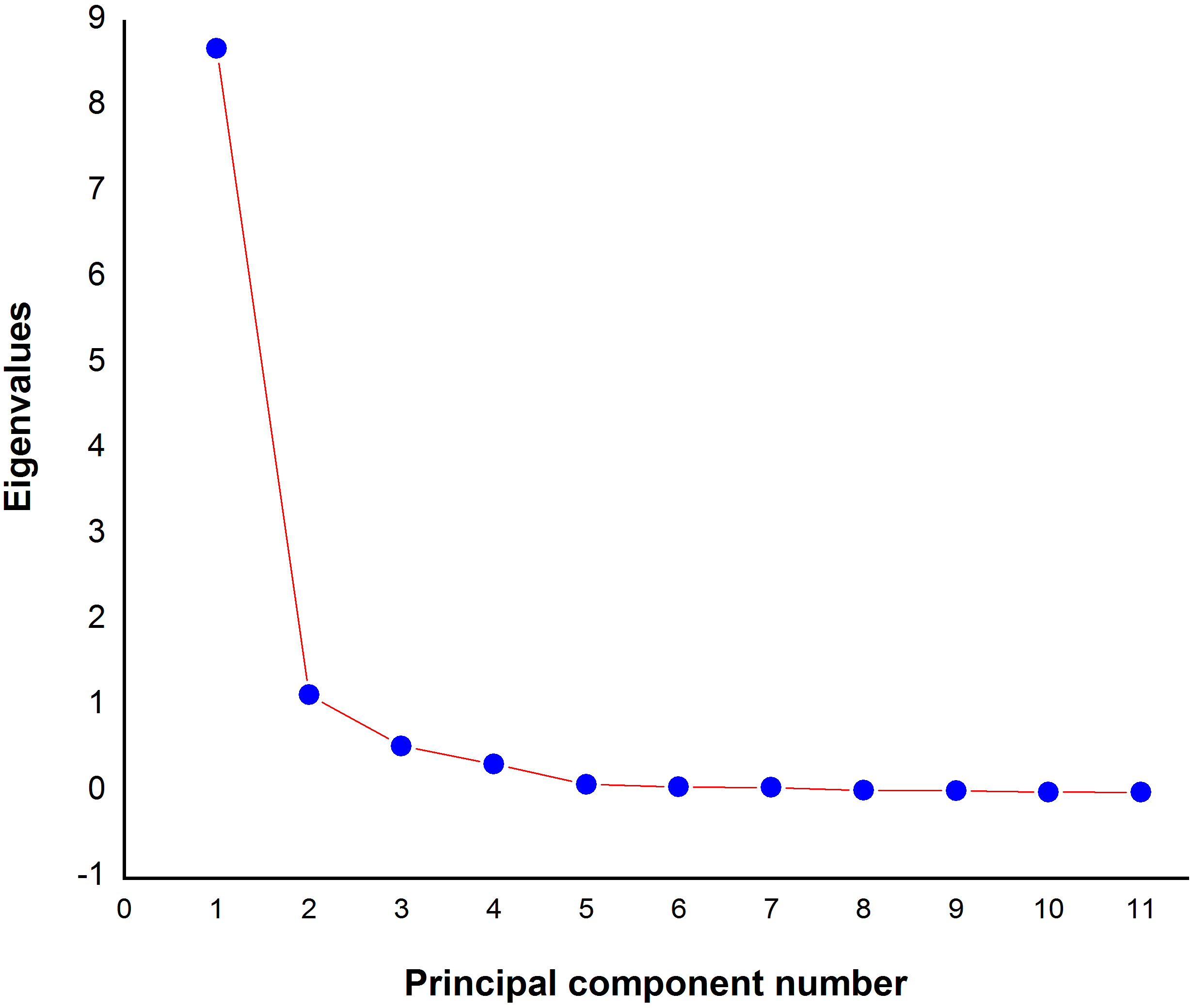
A multivariate statistical method based on trait correlation is termed as principal component analysis (PCA), used to evaluate and review complicated and big datasets in order to examine genetic diversity and how it relates to observed characteristics. Approximately 95% of the genotypic variability for the traits was explained by the first three components whose PC values were determined. Conversely, 89% of the variability was explained by the initial two PCs (Table 4).
Table 4
Eigen values and explained variation by different principal component (PC)
Figure 1 representing the eigen values and principal component number is a PCA-based scree plot. The analysis was performed where a total of eleven principal components (PCs) were determined, and the graph displayed that only two PCs had eigenvalues greater than one, which represented that only PC1 and PC2 made a significant contribution to the caused variation while the eigenvalues of all the other PCs were less than one, which was a non-significant result. PC1 had an eigenvalue of 8.68, and PC2 recorded a value of 1.14.
Figure 1
Scree plot representing the eigenvalues and principal component number among agronomic and quality attributes of Eruca sativa Mill. cultivars.
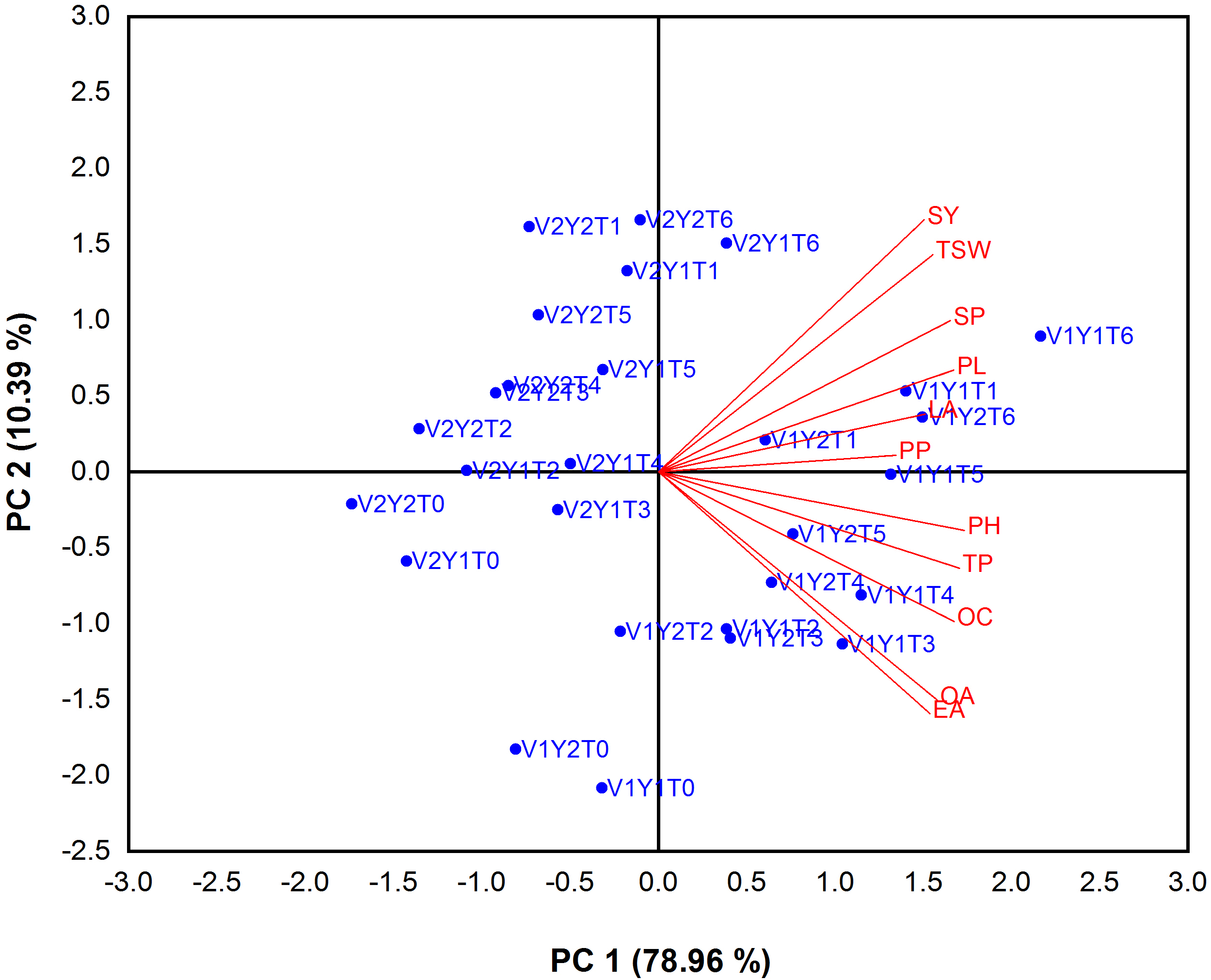
The features that may be categorized into main groups and subgroups according to homogeneity and dissimilarity can be found using a PCA bi-plot analysis, as given in Figure 2. The amount and orientation of loading vectors reveal either a positive or negative contribution of variables to the overall diversity of phenotypes. The indispensible features SY, TSW, SP, and PP aligned on the top and positive side of the loading plot contributed expressively to the computed variance, while others that had no significant impact on the variability were assigned at the bottom of the graph. The degree of variation between the measured attributes was displayed by the genotypic distances among the two studied cultivars. The cultivar on the positive or negative side of the bi-plot performed phenotypically similar for one or more criteria. Moreover, the biggest genetic distance was found between the cultivar that was the farthest from its origin. As a result, the traditional market available arugula cultivar was distributed at extreme places in the score plot and was at the negative side in the bi-plot and far away from NARC (ACC. 26187 – GRI), which was lying at the bi-plot’s positive side, and thereby both exhibited great phenotypic variation (Figure 2). The traditional seed of arugula may or may not give superior results in future too, but selection criteria could consider it.
. Correlation studies for various agronomic and quality attributes of Eruca sativa Mill.
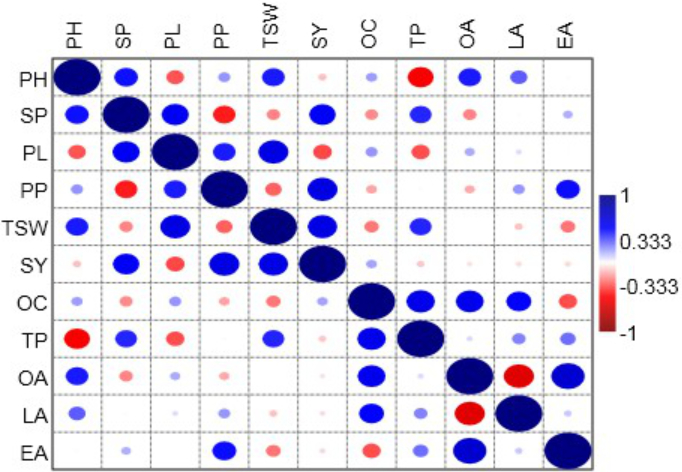
The correlation study presented in Figure 3 exhibited that plant height (PH), seeds/pod (SP), pods/plant (PP), and 1000 seed weight (TSW) of Eruca sativa Mill. exhibited a highly significant and positive association with seed yield. Negative associations were found between the seed yield of the rocket salad cultivars and pod length (PL). Similarly, cultivar thousand seed weight was significantly and favorably connected with PP, SP, and PH, while pod length had a negative association with these parameters. The number of pods plant-1 had a positive association with SP and PH but was negatively correlated with the pod length. The quality attributes demonstrated some unique features, where oil contents (OC) of seed, oleic acid (OA), linoleic acid (LA), and erucic acid (EA) composition showed a significant and positive correlation among Eruca sativa Mill. cultivars, while total protein (TP) was negatively associated with the scultivars.
. Relationship between morphological trait (PH), yield components (SP, PP, TSW), and seed yield of Eruca sativa Mill.
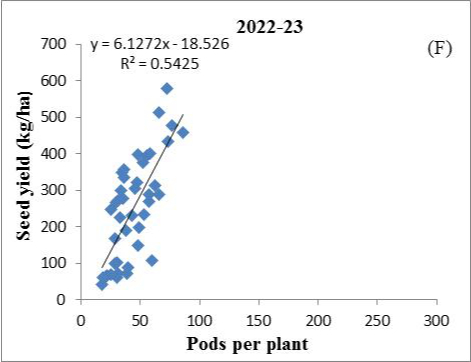
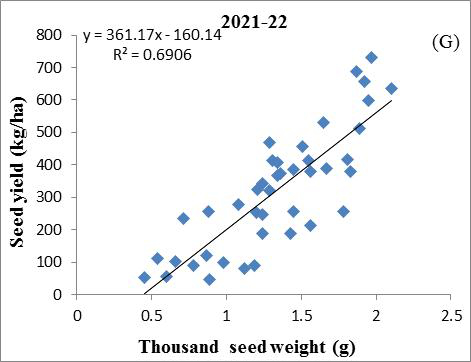
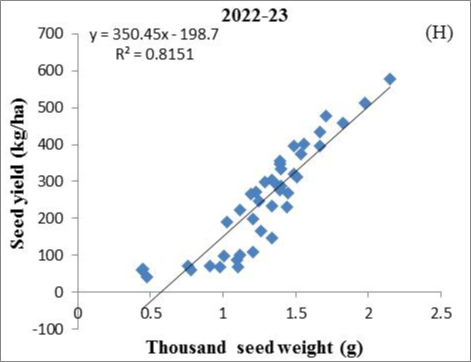
The interconnected physiological processes in plants influenced by external conditions culminate in the yield. The findings of this study demonstrated that the morphological attribute (PH) and yield elements (SP, PP, TSW) all significantly positively influenced the development of SY in rocket salad (Eruca sativa Mill.). The improved nutrient uptake efficiency of Eruca sativa Mill. plants from the soil due to the application of balanced doses of organic and mineral fertilizers maximized plant growth characteristics and yield attributes, which resulted in a positive significant correlation between the yield and all its parameters. It was evident that plant height had a significant contribution to biomass formation, which resulted in the yield. A positive correlation (R2 = 0.47 and R2 = 0.44) between plant height and seed yield was indicated in the two cropping years, respectively (Figure 4A, B). The parameters, including seeds per pods, pods per plant, and thousand seed weight are actual yield determining factors and all these factors made a positively significant contribution to the formation of yield in both cropping years. SY was positively correlated with SP (R2 = 0.62) & (R2 = 0.71), PP (R2 = 0.68) & (R2 = 0.54), and TSW (R2 = 0.69) & (R2 = 0.81) in the cropping years 2021-22 and 2022-23, respectively (Figure 4C, D, E, F, G, H).
Figure 4A
Linear relationships in two cropping years between seed yield of rocket salad (Eruca sativa Mill.) and (A) plant height (PH) for the year 2021–22.
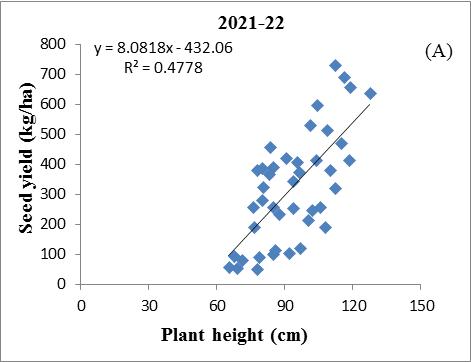
Figure 4B
Linear relationships in two cropping years between seed yield of rocket salad (Eruca sativa Mill.) and (B) plant height (PH) for the year 2022–23.
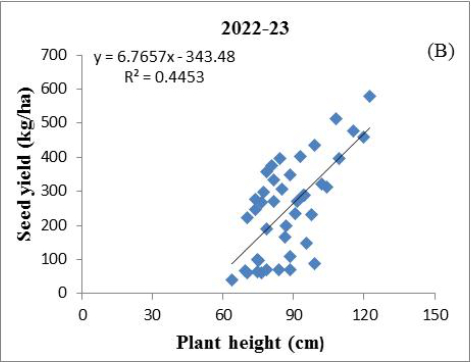
Figure 4C
Linear relationships in two cropping years between seed yield of rocket salad (Eruca sativa Mill.) and (C) seeds per pod (SP) for the year 2021–22.
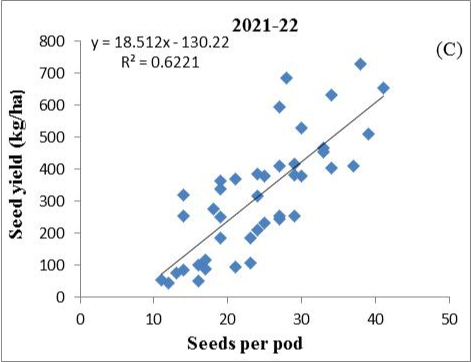
Figure 4D
Linear relationships in two cropping years between seed yield of rocket salad (Eruca sativa Mill.) and (D) seeds per pod (SP) for the year 2022–23.
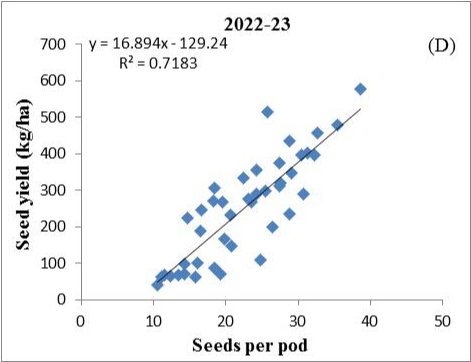
Figure 4E
Linear relationships in two cropping years between seed yield of rocket salad (Eruca sativa Mill.) and (E) pods per plant (PP) for the year 2021–22.
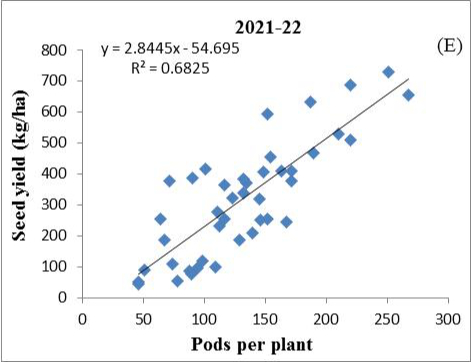
Figure 4F
Linear relationships in two cropping years between seed yield of rocket salad (Eruca sativa Mill.) and (F) pods per plant (PP) for the year 2022–23.
. Discussion
Our research conducted in the highlands of Pakistan’s arid region showed that the accumulation of organic manure and N fertilizer had significant impacts on the growth and yield factors of Eruca sativa Mill. Under the severe economic and demographic pressure in this environment where diminution of soil nutritional level is a major problem and most of the farming is for subsistence, the use of inputs from either organic or inorganic external sources is quite limited. The fertility level was sub-optimal at the experimental site for the production of rocket salad, particularly for the market available arugula seed compared to the genetically modified variety; hence, the crop yield and its dependent factors directly related to soil properties (Bolan et al., 2012; Chen et al., 2013).
The application of plant nutrients through organic and mineral sources improved the soil pH and EC of the experimental site. The soil pH has a potential impact on the accessibility and solubility of critical nutrients for plants. The abundance of Al, Mn, and some other cations and shortage of available Ca, P, and Mo is due to excessive acidity of soil. In the detailed study of our research trial, the soil nourishment with farmyard manure improved the N and P uptake of plants, signifying that ½ NPK + ½ FYM and ½ PK + 2% foliar N in recommended doses improved the availability of primary nutrient elements by reducing losses due to sorption and leaching, thereby, supporting other experimental studies (Agegnehu et al., 2015).
The soil saturation percentage in the experimental area was reduced to a great extent as the major pore spaces between soil particles were occupied by the planted crop. Organic matter (%) at the non-planted area recorded a maximum value, while it was lowered in the planted area due to its excessive use by the crop. An experiment conducted by Selim (2020) revealed that addition of an integrated source of nutrient management improves the physicochemical properties of soil while balancing its pH level, electrical conductivity, and organic matter contents. The soil incorporation of farmyard manure augments it with a substantial amount of nitrogen and other primary nutrient elements that support plant growth and developmental processes (Yousaf et al., 2024b). Organic amendments not only are economical and environmentally benign but also increase soil fertility and crop yields by raising soil C and N levels.
The soil addition of farmyard manure provided greater benefits to Eruca sativa Mill. growth and yield characteristics due to reduction in Al toxicity and improved plant nutrition with nitrogen and phosphorus. According to Gangwar et al. (2006), applying FYM in conjunction with chemical fertilizers increased soil organic matter contents by 44%, improved porosity by 25%, and increased water retention capacity by 16 times when compared to applying chemical fertilizers alone. In comparison to mineral fertilizers, the primary advantages of organic manure integration are that they not only provide nutrients but also enhance the physical, chemical, and biological elements of soil fertility. Long-term soil fertility depends upon soil organic matter replenishment, which comes from animal, plant, or microbial biomass at all decomposition phases. This is because organic matter offers a balanced medium for water and nutrients to support plant growth.
Despite the fact that the nation produces substantial amounts of manures and agricultural wastes that may be used as feedstock for the production of compost, farmyard manure and biochar, competing uses prevent these materials from being returned to the soil. For instance, some estimates indicate that the amounts of nutrients applied as fertilizers are not equal to those of the crop residues and manures used as fuel instead of feed; in other words, the absence of substitute sources of fuel and feed significantly reduces the productivity and sustainability of the highland agricultural system as a whole (Bhunia et al., 2021). Applying compost mixtures, farmyard manure, and other organic manures may lessen the amount of nitrogenous fertilizers needed for growing crops. Reducing the amount of N fertilizer applied can lower food production costs while also reducing environmental constraints. In order to break the cycle of poverty, it is imperative to break the long-term requirement of chemical fertilizers for greater production of biomass for food and soil fertility, which in turn requires the sustainable use of organic sources. Enhancing the local supply of reasonably priced fuel substitutes, increasing stove efficiency, and making reasonably priced feed and forage supplies are some specific actions. In the highlands, it is crucial to utilize all available resources, such as lime and organic amendments, in a coordinated manner to maintain and enhance crop output and soil health. Additionally, Liu et al. (2012) represented that, in field circumstances, the combination of compost and other manure along with mineral fertilizers had a synergistically positive impact on soil organic matter, nutrient levels, and saturation percentage. The NPK contents of Eruca sativa Mill. plants were relatively higher in plots where optimum fertilizer doses were applied in a proper combination than in those implying poor soil status and being the least responsive due to the unavailability of several nutrients. There emerge significant differences in crop control and achievable yields as well as the nutrient utilization efficiencies as a result of different soil fertility status.
There are multiple sets of factors that determine the quality and yield components of field crops, including soil fertility, agricultural techniques, and genotype efficiency. According to Buerstmayr et al. (2007), two important attributes that have a big impact on crop yield and quality are the genotype and soil fertility status. Yan et al. (2016) found that, during specific stages of plant development, photosynthetically active radiation, heat, and soil moisture had a substantial impact on crop yield components and its quality. The genetic architecture and environmental adaptation of certain genotypes may be linked to changes in the yield of different crop cultivars.
As shown in our study, sowing of the genetically modified cultivar improved the agronomic traits of rocket salad. According to Bozokalfa et al. (2011), the genotypes of Eruca sativa Mill. showing a positive phenotypic correlation gave the highest results for plant height, seeds per siliquae, siliquae per plant, and seed yield due to the presence of variability in characteristics, while cultivars representing a negative correlation gave minimum values for all the agronomic parameters (Table 2). Golkar & Bakhtiari (2020) demonstrated that planting genetically improved cultivars of Eruca sativa Mill. enhances the seed oil yield, oil percentage, and other quality attributes through genotypic variation caused by a broad-sense heritability of these characters. Tonguc & Erbas (2012), reported that the overall composition of fatty acids and total oil contents in Brassicaceae species were recorded at minimum levels in cultivars or genotypes showing no diversity for these characteristics.
The values of the agronomic and quality traits for the 2022–23 cropping year were recorded as minimum, which showed a significant impact of the planting years on the growth, yield, and quality of rocket salad (Table 2 and 3). The better plant uptake and assimilation of nutrients in one cropping year compared to the other led to maximum outputs of Eruca sativa Mill., and the difference among various parameters between the two cropping years was statistically significant (Rathore et al., 2022).
The outcomes of plant height for the integrated fertility protocols corroborated the findings of Ghavampoor & Moosavi (2017), who found that a higher nitrogen content extensively boosted plant height of Eruca sativa Mill. The application of organic manure and synthetic fertilizer was a major factor of the rise in plant height among applied treatments in various combinations, which enhanced the plant respiration and photosynthetic activity due to increased cell membrane permeability.
The provision of farmyard manure in a treatment increased leaf chlorophyll content and gave more yield producing tillers than using either of inorganic sources alone. This may also have indicated improved availability of required crop nutrients, vigorous growth, and healthy plants, all of which increased crop yields. Research has indicated that the use of compost and farmyard manure, either separately or in conjunction with other manures, has greater capacity to provide nutrients than any other combination of fertilizers (Fischer & Glaser, 2012; Schulz & Glaser, 2012).
In this study, the soil incorporation of farmyard manure and mineral N as foliar application in combination with PK increased yield producing components more efficiently than any other provided fertilizer treatment. The plant growth process was stimulated and the nutrient use efficiency was enhanced with the integration of organic and mineral sources of fertilizers, which is consistent with the findings of other earlier research. The soil amendment with PK up to 30 kg ha-1 each and N as 2% increased the yield and its components in rocket salad. The NPK application at 15 kg ha-1 each and FYM (10 t ha-1) as an organic source of N had a significant positive impact on crop growth at this level. This could be a result of the FYM and N fertilizer’s partial substitution capabilities: both provide N. Additional research has also demonstrated that, in comparison to using sole doses of mineral fertilizers, the inclusion of farmyard manure + chemical input greatly boosted the crop yields of wheat and maize (Kaur et al., 2008; Meade et al., 2011) and sorghum (Blackwell et al., 2015) when mineral fertilizers were combined with bio-char. Therefore, the addition of organic manures into our production system increases the effectiveness of fertilizer use, ensures maximum yield, and promotes sustainability over time.
The parameters of seeds pod-1 and pods plant-1 are the major factors in Eruca sativa Mill., and economic yield depends upon these parameters. In their experiment, Aslam et al. (20152024) reported that integration of vermi-compost, compost, and other organic manures with synthetic fertilizers improved the supply of macro and micro-nutrients, which noticeably boosted the yield contributing factors of mungbean. A substantial increase in the number of pods per plant can greatly contribute to the economic yield of a particular crop. The soil incorporation of manure and mineral fertilizer in numerous combinations along with foliar application of nitrogen greatly influences the vegetative and reproductive growth stages of Eruca sativa Mill., which results in maximum pod number per plant and improved yield characteristics (Awan et al., 2020; El-Nwehy et al., 2023). The results reported by Favacho et al. (2017) showed that addition of organic manures in the form of green manures significantly increases the overall productivity and economic efficiency of crops while improving plant nutrient uptake efficiency.
The seed yield showed a declining trend with the reduced fertilizer doses in a particular combination. Bhalavi et al. (2023) demonstrated that application of integrated nutrient management using different fertilizer sources significantly enhanced the seed/grain yield of mustard crop. It was evaluated that, with simultaneous application of organic manures and inorganic fertilizers, plants receive nutrient elements necessary to initiate growth processes in the presence of favorable environmental circumstances that improve their photosynthetic activity leading to higher crop yields. In our study, we found a significant positive impact of the application of the integrated fertility treatments on the quality contents of arugula cultivars, as in the study conducted by Malhi & Gill (2002), which revealed that S application (FYM) to canola increased total oil concentrations and protein in seeds on S-deficient soils. Using manures as a source of fertilizer helps to replace chemical nitrogen and phosphorus by 25% while also reviving the soil biological activity and restoring its natural fertility. It also offers protection against certain soil-borne diseases. Organic manures and bio-fertilizers work synergistically to promote the synthesis of growth-promoting compounds, such as gibberellic acid, indole acetic acid, and dihydrozeatin. These compounds exert a positive impact on the physiological activity of plants, which in turn results in increased pod diameter and length and an increase in average seed weight (Parmar et al., 2023).
Increased crop biomass production is linked to the positive nutritional quality of the soil, which is a result of the strong interacting influence of organic sources and fertilizers. This might be explained by the beneficial effects of farmyard manure on root and microbial development in the soil, which in turn has a solubilizing effect on native potassium, phosphorus, nitrogen, and other nutrients. According to Timsina (2018), in modern farming where the nutrient turnover in the soil-plant system is rather significant, neither organic manures alone nor the exclusive application of inorganic fertilizers could provide the yield sustainability at a high order. However, it was shown that the integrative use of organic and inorganic fertilizers was highly promising in terms of sustaining agro-ecosystem and bringing more stability in crop production due to the synergistic influence of organic sources on enhancing the effectiveness of the NPK dose at the optimum level. The mixed use of chemical and organic nutrient sources may have had supplemental and complementary effects, resulting in a sufficient and consistent source of nutrient supply. Strong vegetative development and elevated chlorophyll contents may be the cause of a notable increase in yield and yield metrics in Eruca sativa Mill. With the integrated nutrition supply. These factors work together to speed up the photosynthetic rate, which in turn increases the amount of carbohydrates available to plants. It is commonly known that adding organic manures and bio-fertilizers to soil can improve its physical, chemical, and biological properties. This, in turn, can help plants absorb nutrients more effectively and produce larger yields (Yang et al., 2021).
The crops nourished with organic manures exhibited superior quality compared to those cultivated traditionally with chemical fertilizers. The productivity of any crop is contingent upon the process of photosynthesis, which is influenced by the chlorophyll content of plant leaves. Magnesium is a crucial component of chlorophyll, essential for the photosynthetic reaction, acts as an activator for numerous enzymes involved in photosynthesis, and facilitates the uptake and translocation of sugar substances within plants (Ali et al., 2024). Likewise, the nitrate reductase enzyme is recognized for its role in nitrogen assimilation. Applying FYM at 10 t/ha greatly enhanced the oil content and oil yield of seeds. It could be because of the special function that organic manure plays in enhancing nutrient availability and thus the nutritional environment of rhizospheres. Therefore, the plant’s balanced intake of nutrients due to the elevated level of FYM favored the enzymatic processes involved in the synthesis of oil. The application of FYM resulted in an increase in both seed production and oil content, which was reflected in the rise of oil yield. A significant amount of photosynthesis may have been diverted to protein synthesis in an environment with high N availability, potentially creating a shortage of carbohydrates that would then be converted to “acetyl co-enzyme A” for the synthesis of fatty acids. The enhanced protein and oil contents in the seeds of Eruca sativa Mill. observed in our study in the treatments involving the combined application of nutrients may be attributed to the integration of farmyard manure with chemical fertilizers, which augmented the utilization of native nitrogen and phosphorus through organic acids generated during decomposition. Additionally, the induced chelating effects on micronutrients may have improved the availability of nitrogen, phosphorus, and potassium as well as, the availability of solubilized micronutrients.
The provision of solubilized phosphorus increased the oil contents and seed oil yield of Eruca sativa Mill., which may be attributed to the fact that fatty acids are synthesized within the plants due to the conversion of acetyl coenzyme A to malonyl coenzyme A when ATP and phosphate are present (Kusvuran & Ellialtioglu, 2021).
The principal component analysis represented the individual performance variances for PC1, PC2, and PC3, which were 78.96%, 10.39%, and 4.95%, respectively. There were significant and positive contributions by PH, SP, PL, PP, TSW, SY, OC, TP, OA, LA, and EA for variation in the PC1 and it dominated the system, while in PC2, the PH, OC, TP, OA, and TA parameters caused a devastating impact on variation. All the other PCs had low eigen values for different variables and did not make a significant contribution to this principal component (Table 4).
The correlation study revealed that cultivar NARC (ACC NO. 26187 PGRI) validated the exceptional outcomes of PH, SP, PP, TSW, OC, OA, LA, EA, and higher seed yield (SY) when compared to the traditional market available seed of arugula due to the fact that the majority of its agronomic and quality attributes were positively associated with each other, while the negative correlation was limited among few parameters (Figure 3).
In our study, including both cropping years, the strongest correlation was found between the grain yield and all its dependent parameters. Given that soil organic amendment has the potential to increase the amount of nutrients and water in the soil that are available to the developing crop, this could be one explanation for the noteworthy correlation between the seed yield and SP, PP, and TSW. The plant accessible soil nutrients and improved efficiency of nutrient uptake due to the organic manure and N fertilizer application had a greater impact on the rocket salad crop performance than did with the provision of any fertilizer source in the sole doses of the treatments. Additional research has demonstrated a linear relationship between yield and yield characteristics of maize and groundnut crop as a result of the application of FYM and NPK separately and in combined doses (Slafer et al., 2014).
. Conclusions
The study revealed that the use of Eruca sativa Mill. cultivar NARC (ACC. 26187 – GRI) and the treatments with PK @ 30-30 kg ha-1 + 2% N foliar and NPK @ 15-15-15 kg ha-1 + FYM @ 10 t ha-1 not only contributed to highly significant outcomes with increased results for the agronomic characteristics, including plant height, seeds per pod, pods per plant, thousand seed weight, and seed yield, but also provided superficial outcomes for quality attributes while improving oil contents, total protein, fatty acids, e.g. linoleic acid, oleic acid, and erucic acid, when planted in two subsequent cropping years in the rain-fed areas of the Potohar region with limited availability of resource inputs. Irrespective of the amount of NPK and FYM manures used in this experiment, the production of Eruca sativa Mill. was maximized when these fertilizers were applied in different combinations, which also improved the soil NPK level, its organic matter contents, and other physicochemical properties. A significant impact on all the studied indices of Eruca sativa Mill. was validated and affirmed by a strong positive correlation between the yield and its components and the high values of regression coefficients. Therefore, it is highly recommended for commercial growing farmers, especially subsistent farmers of rain-fed regions, to plant the suggested variety using RDF in various combinations and assume it a viable option to improve net productivity and maximizing returns while ensuring sustainability in the agro-ecosystem.
. Acknowledgements
This two-year research trial was supported by the Department of Agronomy, PMAS-Arid University Agriculture Rawalpindi, Pakistan. The authors pay sincere gratitude to the university administration for the allotment of the site at the University Research Farm for conducting this research experiment. Special thanks to Chairman of the Agronomy Department, and Director of the University Research Farm, for assuring on time availability of all the required inputs to conduct this research experiment and providing valuable insights while writing this research article.